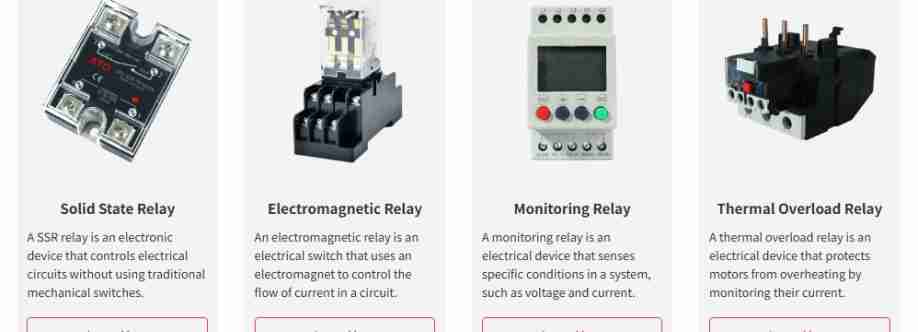
Continuous mechanical vibration and structural shock constantly threaten the stability of industrial control panels. ATO anchors these vulnerable systems as a strategic B2B relay vendor, distributing high-performance electronic relays and control circuit components directly to international lines. When traditional mechanical interfaces degrade your uptime, a heavy-duty solid state relay delivers contact-free reliability. However, if your automation blueprint requires a visible, physical break in the electrical path, a dependable ATO electromagnetic relay is mandatory.
A relay overheating under full electrical load is a major red flag for panel technicians. If a thermal camera shows heat concentrating at the wire connections, you are dealing with loose wiring terminals and escalated terminal contact resistance. The moment a screw terminal loosens from physical impact, localized electrical contact resistance spikes, melting surrounding wire insulation. Implementing a strict torque maintenance protocol with a calibrated industrial torque wrench stops this damage before components warp. Standardizing early panel design around an ATO monitoring relay and a heavy-duty thermal overload relay protects your system while completely bypassing extended supply chain delays.
Production profitability relies entirely on consistent control cabinet switching. Operating as a global engineering partner and leading relay supplier in China, ATO manufactures more than 30 specialized electronic relay series built to translate fragile logic inputs into high-amperage machine control. Integrating an ATO solid state relay or an SSR relay provides smooth, high-frequency operations without physical mechanical degradation. For galvanic isolation loops, our traditional electromagnetic relays utilize a heavy-duty coil to handle intense switching demands cleanly.
When a relay failure or relay hot condition occurs, maintenance crews look for high terminal contact resistance and incorrect screw tightening torque. Routine thermal cycling causes commercial wiring terminals to back away, restricting the mating surface area and forcing a sharp spike in localized electrical contact resistance. Enforcing a mandatory terminal torque maintenance protocol secures all hardware to factory engineering fastener torque specifications. Using a calibrated industrial torque wrench lowers connection resistance and stops thermal patterns instantly. Adding an active monitoring relay and an ATO thermal overload relay ensures total operational security backed by millions of units fully stocked for same-day delivery.