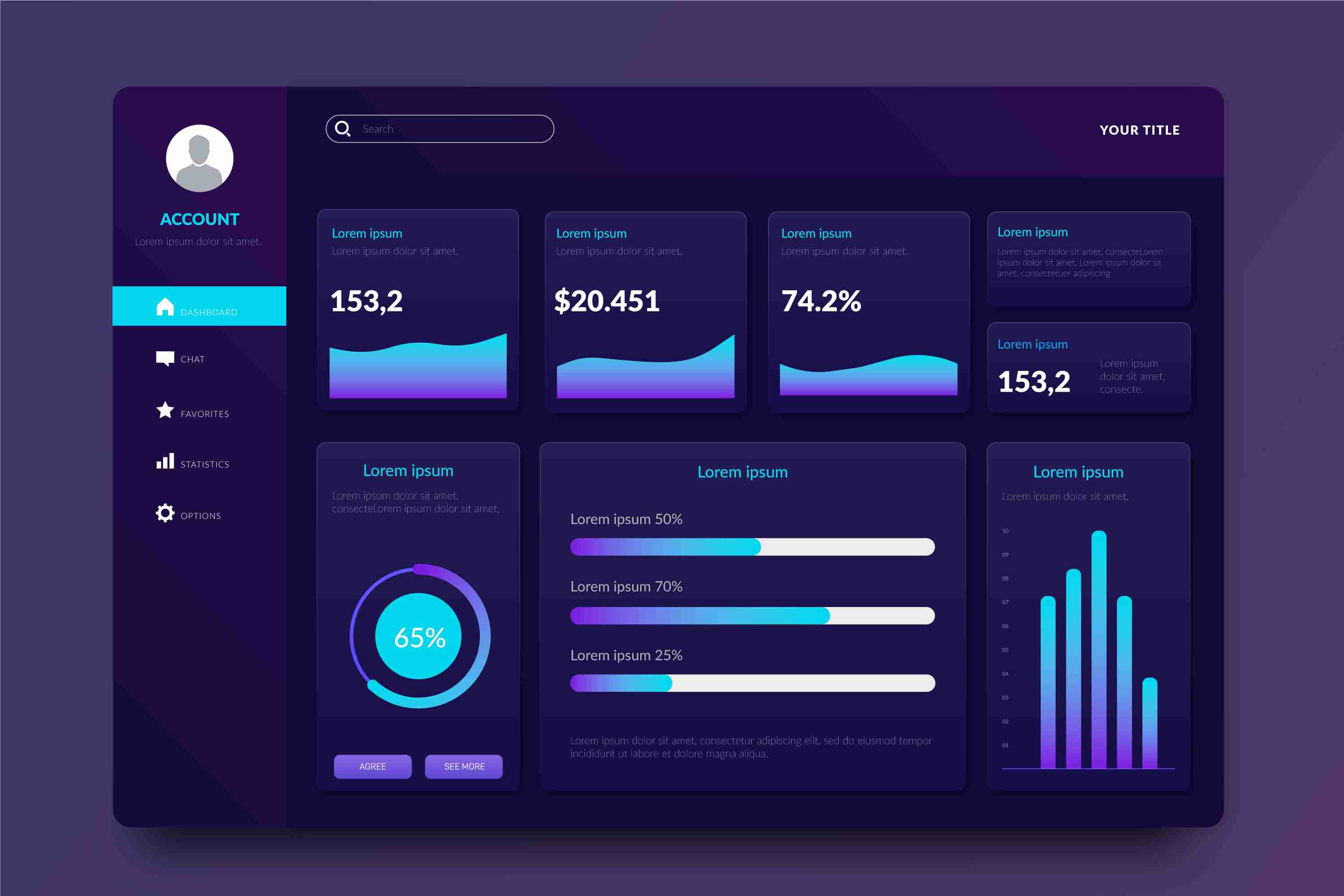
Power BI Finance Dashboard — A Smarter Way to Handle Financial Reporting
In today’s fast-paced business environment, financial data flows in from many directions — sales systems, accounting software, spreadsheets, ERP tools, and more. Just using static reports or spreadsheets to track revenue, expenses, cash-flow, and profitability can quickly become overwhelming. That’s where a Power BI Finance Dashboard shines. It gathers data from varied sources into a unified, real-time view and converts raw numbers into visual insights executives and finance teams can act on.
Why Traditional Spreadsheets Often Fall Short
For small sets of data or simple budgets, spreadsheets work. But as businesses grow and financial complexity rises — multiple cost centers, departments, revenue streams, and frequent transactions — spreadsheets begin to choke under the load. Data consolidation becomes manual and error-prone, reports get outdated soon after creation, and collaboration becomes difficult when multiple people edit files. In short: spreadsheets become a bottleneck rather than an asset.
Moreover, static tables and charts rarely tell the full story. They show what happened — but seldom let you explore *why* it happened. When you need to compare monthly performance across departments, analyze cash-flow trends, or track profitability by project, manually filtering and recalculating becomes tedious and risky.
What a Power BI Finance Dashboard Does Differently
A Power BI Finance Dashboard transforms how you view, manage, and act on financial information:
* **Unified, centralized data* It brings together data from multiple systems — accounting software, ERP, spreadsheets, databases — into one consolidated view. This gives finance teams a reliable, single source of truth.
* **Real-time or regularly refreshed insights* Instead of waiting for month-end manual consolidation, dashboards can refresh data automatically. This keeps financial metrics — revenues, costs, cash flow — current.
* **Interactive visual analytics* Rather than static tables, finance data becomes dynamic charts, graphs, trend lines, KPIs and breakdowns. Decision-makers can filter by period, department, product line — and drill down into details with a click.
* **Better expense control & forecasting* With visibility into costs, margins, cash inflows/outflows, and budget vs actuals, you can detect cost overruns early, plan budgets more accurately, and forecast future performance with clarity.
* **Scalability & collaboration* As your business grows, the dashboard grows with it — accommodating more data, more departments, more complexity — without sacrificing performance. Plus, teams across divisions can view the same dashboard, improving transparency and alignment.
What You Can Track — Key Financial Metrics & Insights
With a well-designed finance dashboard, you can monitor:
* **Revenue vs Cost of Goods Sold (COGS)* Understand gross profit and identify which products or services drive profitability.
* **Gross and Net Profit Margins* Track overall profitability and also at divisional or project level.
* **Operating Expenses & Overheads* See where money is going — department-wise, project-wise — easily spotting overspending or inefficiencies.
* **Cash Flow & Liquidity* Monitor inflows, outflows, receivables and payables — ensuring healthy working capital and financial stability.
* **Budget vs Actual Performance* Compare planned budgets with actual results, highlighting variance and allowing prompt corrective action.
* **Return on Investment (ROI) & Performance Ratios* Evaluate how well investments and projects perform and decide resource allocation based on real data.
This level of clarity and monitoring enables businesses to make strategic decisions, not just reactive ones.
How It Changes the Role of Finance Teams
When finance information is accessible and visually clear, finance teams shift from being number-crunchers to strategic advisors. Instead of spending hours consolidating spreadsheets and generating static reports — often prone to error — teams can focus on analyzing trends, forecasting cash flow, advising leadership, and planning for growth.
Leaders get timely, accurate insights; controllers get visibility into cost centers; analysts get deep-dives into financial performance; everyone works off the same source of truth.
Designing Effective Dashboards — What Matters
Building a finance dashboard is more than dumping numbers into charts. For clarity and usefulness:
* **Design for your audience* Executives prefer summary views (profit, cash flow, margins), while analysts may need detailed drill-downs (departmental expenses, cash flow by project). Provide separate views for different user roles.
* **Keep visuals clean and focused* Don’t overcrowd dashboards with every possible metric. Focus on essential KPIs relevant for decision-making. Use filters and drill-downs for deeper insights without clutter.
* **Ensure data consistency and governance* As data sources multiply, ensure definitions are consistent (e.g. what counts as expense, revenue, cost center). Maintain data integrity, proper access control, and audit trails.
* **Enable scalability* Structure dashboards so they can grow with your business — more departments, more data, more metrics — without becoming slow or unmanageable.
Who Benefits — From Startups to Large Enterprises
* **Small businesses & startups* Get clarity on cash flow, expenses, and profitability without complex accounting setups.
* **Growing SMEs* Easily consolidate data from different departments or projects, and track budgets vs actuals — without manual consolidation.
* **Large enterprises / multi-entity firms* Integrate data from multiple entities, consolidate accounts, manage budgets, cash flow, and performance — across departments — all in one unified dashboard.
In Summary — From Spreadsheets to Strategic Finance
Financial management has evolved. What once worked — static reports and spreadsheets — now limits growth, hinders clarity, and delays insight. A Power BI Finance Dashboard transforms this landscape: it brings together data, visualizes complexity simply, updates automatically, and empowers teams with clarity and speed.
By moving from manual, static reporting to interactive dashboards, businesses gain not just numbers — but insight. Instead of reacting after the fact, they can anticipate, plan, and steer financial health proactively. When data becomes clear, finance becomes strategic. And that’s where growth — sustainable, informed, and confident — truly begins.
More Info:https://www.knowledgeexcel.com..../power-bi/finance-da